It was a dry, dreary October afternoon in rural Solapur, and mine was the only car driving on the narrow desolate road. I had to drive only 12 Km from my urban residence, to reach the village, of ‘N’. I am calling it ‘N’ to preserve the anonymity of what I will describe in my piece of writing today. As I entered the village, I saw the familiar sight of a school, a Panchayat office, an under the tree ‘Katta’, where men were lounging/chatting, and a ‘Kirana’ shop selling sweet tea and packaged food.
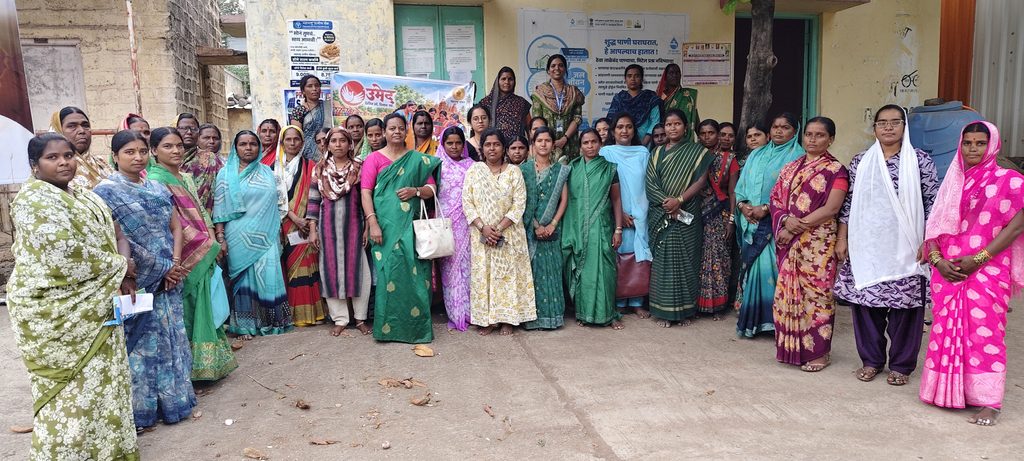
I was representing our not-for-profit organization in Rural Solapur, StreeArogya Rural Foundation (SARF), at a village meeting for women. This meeting was organized by the ‘Umed’ team last week. Umed works with self-help groups (Bachatgat groups) under the Maharashtra state rural livelihood mission, Ministry of Rural Development. Umed largely focuses on financial and livelihood support for rural women; however, health is one of its mandates. SARF, over the last few weeks, has started a formal collaboration to work with this resourceful network of people.
The occasion was ‘Navratri’. And Umed wanted to organize a ‘health’ discussion for the women. I was one of the facilitators. There were three other people, from different non-profit/ project backgrounds.
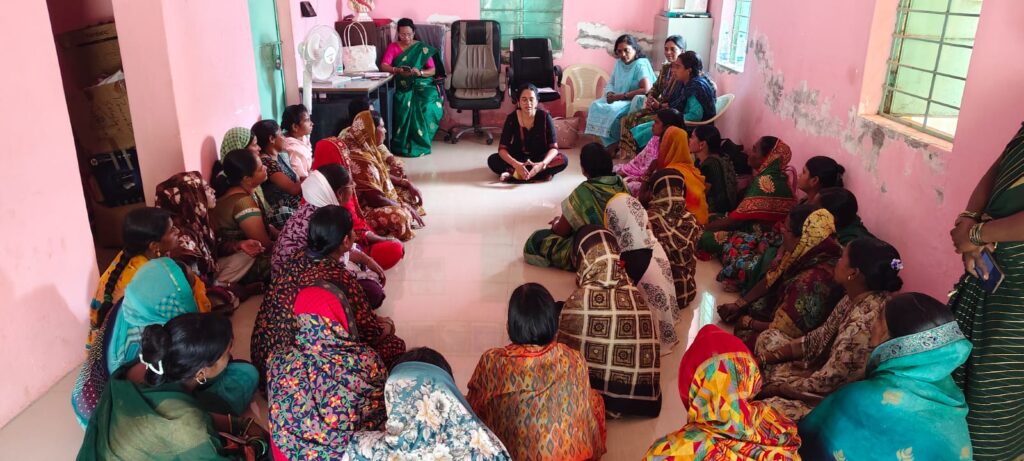
The Umed coordinator, a very effective orator, introduced us, and invited me to begin. As each of us had about 20 minutes of talk-time, I asked the women to choose what they would like to discuss about, with me. Would they like to discuss on unnecessary hysterectomies, understanding and dealing with their pain or on better nutrition. They chose pain. Almost everyone in the room of about 40 women had experienced pain. They were clear that pain started in their 30s. They were not sure why. I tried to connect their experiences of pregnancy, possible bone density loss, inadequate nutrition, and physically demanding work, to get them to see what I was seeing. A systemic interplay. Of unsaid, and unwritten patriarchal norms, high burden of expectations, coupled with difficult access to good quality healthcare. None of them had used any accompanying modality of pain-relief like oil massages, heat therapy, stretching/ joint strengthening exercises to alleviate/prevent their pain. They relied heavily on over-the-counter medicines and injections costing around ₹100 that offered temporary relief. Every time they had a more severe form of pain/ ailment, they had to take rickshaws to the city, as their village does not have a public health facility. It would cost them INR 1000-1500 for a temporary fix that would deprive them of four to five days’ wages (the current wage rate for agriculture is 250/day for the women). And they continue to endure pain, because they do not seem to have much of a choice. For a very small part/attempt I demonstrated some simple stretching exercises and shared videos of joint, back strengthening exercises, pointers of posture and nutrition. I closed my talk-time, to some heartwarming applause.
People after me, representatives from other organizations and projects, spoke of cancer screening and mental health. They shared the importance of screening, the common symptoms of common mental disorders. I heard moving stories of families under high mental distress.
The session seemed successful for the 1.5 hours we were there. And the women were engaged, interactive, attentive, and seemed receptive.
The time then came for feedback from the women. The Umed coordinator and representatives from other organizations wanted the women attendees to give feedback on the discussion. One woman said, “what is the use of learning about mental distress, when we know that our spouse’s alcohol problem is causing our distress.” That one statement set in motion, a heated discussion among the women on how their village has four alcohol stores and how the substance is causing havoc in their lives. Mind you, the village does not have a single health facility. The women expressed a strong desire of closing these stores down. One of them had given written complaints to the ‘gram sangha’ but of course there had not been any response. One of them was saying that she had tried to ‘organize’ women to conduct rallies, but had received a tepid/ lukewarm response. They asked us for help in this issue, and really, we were all just too stunned to respond.
The women were not simply asking us to solve the problem. They had already submitted complaints and tried to organise collective action. They were asking what an organisation working in their community could do when their own efforts had met with little response.
The Umed coordinator was discreetly telling me that in another village, a woman had taken this issue into her hands and had faced harassment from multiple avenues.
Finally, he was the one who responded to the topic, in a cautious manner.
The team who had come to lecture/ discuss health suddenly seemed just plain pointless. I reflected on how what the health team wanted to discuss and what the women considered essential to their health were very different things. And how a ‘health team’ was so ill-equipped to address a complex issue of alcoholism, driven by commercial, social, and political structural, systemic factors.
“We are stressed about Alcohol use among the men in our village, what can you do about it?” She asked. And sadly, at this point, our answer has been: ‘Nothing.’
We may not have answers to all the questions that women in these villages raise. We may not even be equipped to address some of their most pressing concerns. But perhaps community engagement begins with something more fundamental than providing answers: creating spaces where women can ask difficult questions, challenge our assumptions, and tell us when our interventions fall short of their needs.
The road ahead will be long and circuitous. Our task is not to pretend that we know the way, but to keep listening, learning, and finding ways to walk it together.