

The Hidden Burden of Infertility in Rural India
India is known for its enormous population. Yet behind these numbers are millions of couples who desperately want a child but are unable to conceive. In many rural communities, the pressure to have a baby begins soon after marriage. When pregnancy does not occur, the woman is often questioned and blamed. She may face repeated treatments, humiliation or harassment from her family. But infertility is not a woman’s failure. It may be related to the woman, the man, both partners and sometimes, no clear cause can be identified. Couples need understanding, appropriate medical care and emotional support—not blame.
How common is infertility?
Precise data from rural India is limited, but studies suggest that infertility may affect approximately 7–12% of rural couples. The figures vary depending on the population studied and the definition used, but they show that infertility is a significant and often hidden health problem.Behind every statistic is a personal story—often involving emotional distress, financial pressure, repeated hospital visits, expensive investigations, marital tension and social isolation.
Sometimes, the first step is simpler than we think
At one of SARF’s cervical cancer screening camps in the village, I met a deeply distressed 26-year-old woman with a diploma in pharmacology but not working. She had been married for more than two years and had not conceived. Her family was putting her under tremendous pressure.The couple had undergone several investigations and had been advised to proceed directly to IVF—a treatment they could not afford.
An ultrasound showed a heart-shaped uterus, a congenital difference that may sometimes affect pregnancy but does not necessarily prevent natural conception. Rather than moving immediately to expensive treatment, we adopted a step-by-step approach.
The couple received counselling, mild ovarian stimulation, ultrasound monitoring and advice about the timing of intercourse. After two cycles, she conceived. Her ultrasound showed a healthy pregnancy with a beating fetal heart. We had included her husband in the counselling from the beginning since we realized that more than her anatomic issue, it was probably her mental stress that was preventing conception.
Another young woman travelled from a distant village after being diagnosed with polycystic ovary syndrome (PCOS, now renamed PMOS) had been unable to get pregnant for the past 2-3 years. Despite repeated ultrasound examinations, she had received little explanation about the condition or what she should do next. Following counselling, appropriate treatment, mild ovarian stimulation and timed intercourse, she also became pregnant.
These stories do not mean that IUI or IVF is unnecessary. Many couples genuinely need advanced fertility treatment. However, they demonstrate why careful assessment – psychological and clinical and appropriate step-by-step care should usually come before complex and expensive interventions.
What should fertility care include?
Infertility is generally evaluated after 12 months of regular, unprotected intercourse without conception. Earlier assessment may be appropriate when the woman is older or has irregular periods or a known reproductive condition.
A basic fertility assessment should include:
- Emotional and psychological well-being
- The medical and reproductive history of both partners
- Ovulation and menstrual cycles
- Semen analysis
- Examination of the uterus and fallopian tubes
- Relevant conditions such as thyroid disorders
- The timing and frequency of intercourse
Infertility is a couple’s health issue
Too often, infertility is treated only as a woman’s problem especially in the rural setting. Women may undergo repeated examinations, scans and treatments while their husbands are rarely asked to have even a basic semen analysis. Male factors may contribute to infertility in approximately 20–40% of couples therefore it is vital to have both partners from the beginning of the treatment. When husbands participate in counselling, they are better able to understand and support their wives. This is particularly important in rural joint-family settings, where pressure from relatives can be intense. Couples need to feel that they are facing the problem together.
Bringing compassionate care closer to home
For rural families, fertility care may involve long journeys, lost working days and substantial expenses for consultations, investigations and medicines. Limited access to basic services can also lead to delayed diagnosis, unnecessary tests and treatments that patients do not fully understand.
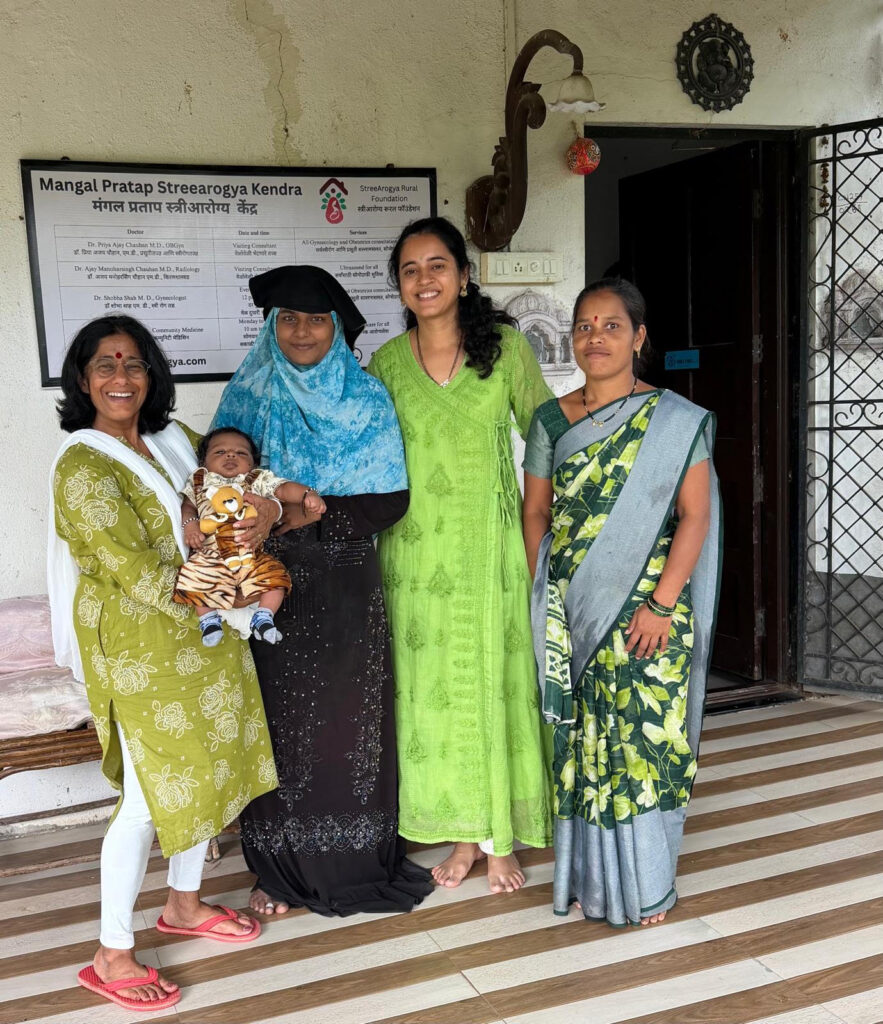
At Stree Arogya Rural Foundation (SARF), we cannot provide every advanced fertility treatment. However, we can offer compassionate counselling, continuity of care, systematic initial assessment and appropriate basic interventions. Sometimes, as these stories show, that may be enough.
Simply hearing the words, “This is not your fault. Let us understand what is happening and face it together,” can mark the beginning of a hopeful journey.
India may have more than a billion people, but the desire for a child remains deeply personal. Couples experiencing infertility deserve respect, affordable care, accurate information and evidence-based treatment.
Most importantly, they deserve to know that infertility is a health issue—not a measure of a woman’s worth.
Patient details have been changed or presented without identifying information to protect confidentiality.
4 thoughts on “When having a large population doesn’t mean everyone can have a child”
Compassion, patience and kindness- so integral to top quality medical care, but ignored too often! Thank you for highlighting the stress of infertility and giving great care!
Excellent initiative for rural set ups. A small documentary on women reproductive biology and common causes of pregnancy failure along with faulty intercourse methods and timing can help rural couples in overcoming several faulty impressions, myths and knowledge gaps
Thank you v much for such a relevant issue – we will try to do. Right now our Funds are limited hence most of our programmes are getting delayed .
Thank you Dr Mathur. That is a useful suggestion. We have noted it and will incorporate it in the coming months.