July 2026 marks two years since StreeArogya Rural Foundation began its formal journey in North Solapur Block, Maharashtra. It has been an interesting and engaging journey for our directors, starting from a chance meeting in a train journey, to now, brainstorming over strategies to drive meaningful change for the communities we serve.
The last two months have been quiet on our website. Our previous blog was published in April, and since then May, June, and July have been some of the most challenging months in our young organization’s journey. First, because our funds have been running dry, putting our Founder Director Dr. Priya under stress, second, because our Executive Director, Dr. Kusum, had to take a week-long break to recover from a harrowing medical situation in May-June.
As we complete two years of work in rural Solapur, this seems like the right moment to pause, reflect, and share where we stand.
Building a foundation Before Growing
StreeArogya Rural Foundation is still in its infancy.
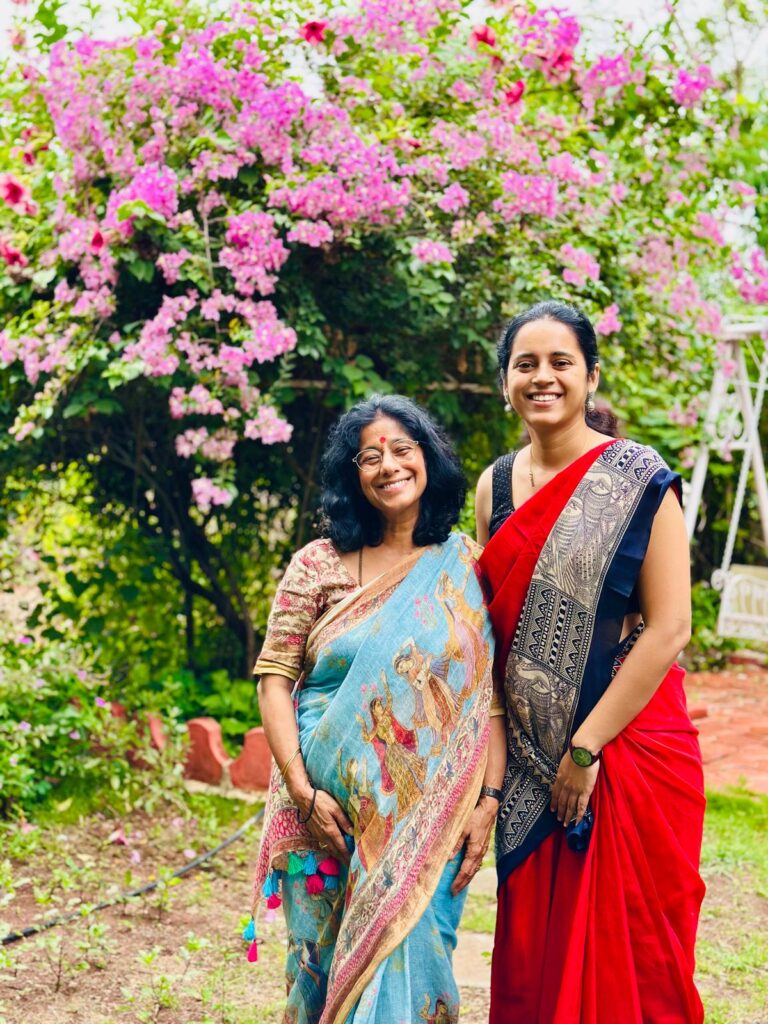
Our two directors come from the medical fraternity. Dr. Priya Ajay Chauhan, our Founder Director, is an obstetrician and gynaecologist. Dr. Kusum Moray, our Executive Director, is a public health physician with training in Community Medicine.
When we first arrived in North Solapur, in 2022, we did not begin with solutions. We began by listening.
Over the last two years, since we began formal operations, we have worked to understand the community, build trust, learn from women, and appreciate the strengths and limitations of the local healthcare system. Much of this learning happened not inside our clinic at the Arogya Kendra/Health Centre, but in village meetings, homes, and community spaces.
One of our most valuable platforms has been the BachatGat—women’s self-help groups that have served as vibrant community institutions across these villages for over a decade. Meeting women where they already gather has helped us understand not only their health problems but also the social realities that shape those problems.
Our Three Pillars
Our work rests on three interconnected pillars:
- Prevention through community awareness and early detection.
- Comprehensive primary healthcare, with a strong emphasis on avoiding unnecessary surgical interventions wherever safe and appropriate.
- Research with and for the community, generating evidence that can improve health services and influence policy.
Underlying all three pillars is something we believe is indispensable: reliable data—both quantitative and qualitative. Good intentions alone cannot improve public health. They must be accompanied by evidence.
What Women Have Told Us
As our understanding has grown, certain priorities have become unmistakably clear.
Two health concerns consistently emerge as urgent needs.
The first is chronic musculoskeletal pain among rural women who often spend 8–10 hours each day engaged in agricultural work, domestic labour, caregiving, and other physically demanding responsibilities. The work is even more relentless among the migrant sugarcane labourers who arrive in the region from neighbouring districts like Beed, for four-six months every year.
The second is heavy menstrual bleeding (menorrhagia), and related gynaecological conditions, which contribute to the high rates of hysterectomy observed in Solapur district (5-8%) compared to state and national averages (2-3%). Many women view surgery as their only option because they are unaware of alternative treatments or cannot access them. These rates have been reported to be a startling 35% among the migrant sugarcane labourers.
Other important health concerns are equally significant, although they are not yet perceived as immediate priorities by many women. These include poor nutrition, anaemia, low dietary diversity, screening for cervical, breast and oral cancers, and the burden of mental and psychosocial distress.
Through conversations in villages, we repeatedly hear stories of women balancing relentless physical work with caregiving responsibilities, unpaid labour, financial dependence, domestic violence, and substance use within families. These experiences affect both physical and mental health.
Yet, despite the scale of these problems, community-level data on many of these conditions are remarkably limited.
From Observations to Evidence
Our next chapter is about moving from observations to measurement.
We want to understand these problems systematically, measure their burden, evaluate interventions, and demonstrate meaningful improvements over time.
How can chronic pain be reduced to improve quality of life among agricultural labourers?
How do we facilitate a drop in anaemia among girls and women through interventions that are culturally acceptable and locally feasible?
Can women with menstrual disorders receive effective treatment before surgery becomes necessary?
Can psychosocial distress be recognised earlier and addressed through community-based support?
These questions have been explored in different ways across India and globally. We have spent considerable time reviewing the available evidence, learning from successful programmes, and identifying approaches that may work in our setting.
At the same time, there are areas where much remains unknown.
Nutrition is one such area. India has struggled with anaemia for decades despite numerous programmes. We believe that improving nutrition requires looking beyond food alone and understanding the social, cultural and economic factors that influence women’s diets, workload, decision-making power, and access to resources.
Encouraging Early Results
Although we are only beginning, we have seen encouraging signs that community-based approaches can work. One example is our cervical cancer screening initiative.
Working with 450 rural women, we increased screening uptake from just 2% to nearly 24%. A major component of this programme was a culturally appropriate educational film-Shant Shabdh Garbache- produced by our Founder Director in the local language, combined with sustained community engagement. We did not stop at the screening, we provided compassionate support, follow-up care, and management for women who tested positive on the test.
We will be presenting these findings at a scientific conference later this year and hope to build on this work by expanding screening across more villages and, eventually, the district.
These are early successes, but they remind us that thoughtfully designed, community-centred interventions can make a measurable difference.
At a Crossroads
The past three months have also reminded us that meaningful public health work requires sustained resources.
Like many young nonprofits, we are navigating the difficult task of building a financially sustainable organisation while remaining committed to rigorous, community-driven work. We have spent many months in conversation with potential partners and funding organisations, sharing our vision through meetings, phone calls, emails, and presentations.
Our priorities are clear.
The community has helped us identify the problems that matter most.
The scientific evidence has shown us many promising solutions.
What we now need is the resources to implement, evaluate, refine, and scale those solutions.
Looking Ahead
Two years ago, we arrived with questions.
Today, we do not have all the answers, but we have a clearer understanding of the challenges, stronger relationships with the communities we serve, and growing evidence that locally designed interventions can improve women’s health.
There is still a long way to go.
Our aspiration is not simply to provide healthcare, but to generate evidence, strengthen primary care, prevent avoidable suffering, and contribute to a future where rural women receive the respectful, effective, and accessible healthcare they deserve.
The foundation has been laid.
The next chapter is about building on it.
2 thoughts on “Two Years of Listening, Learning, and Laying the Foundation”
Wishing this young organisation all the best
Thanks a lot!